
A new 2026 commentary in the journal of Body Image argues that one’s body image should be a consideration when weighing the risks and benefits of GLP-1s. What I love about this article is that it highlights much of what I’ve been seeing in my practice over the past few years regarding GLP-1 use. I am not anti-GLP-1. I worked in diabetes education for years and am well aware of use-cases. However, they’ve become so mainstream now that I am relieved to see this nuance being considered.
Related: Cultivating a Positive Body Image While Healing Your Relationship with Food
Weight loss does not automatically improve body image.
Over the years I’ve asked client after client if they had improved body image at lower weights, and almost everyone has said “yes, absolutely”. I’m not one to question lived experience; for better or worse, I believe my clients, at times to a fault. That being said, a few have reported that they did not have improved body image and still had things they didn’t like about their body.
This commentary puts this phenomenon into words. What I think the former group was experiencing was improved body satisfaction. They preferred their smaller bodies, often because they fit into culturally accepted body size, or they had improved functional status (more on that soon).
The authors note this in the research as well. Some people certainly experience improved body satisfaction after weight loss, but may still struggle with body surveillance (i.e. weighing, “body checking”), fear of weight regain, or concerns about loose skin or other appearance changes. A person’s self worth may still be contingent on appearance, even if they are happier with their current weight. Ironically, weight loss through GLP-1s may actually contribute to a more fragile relationship with one’s body.
Those who struggle with body image may be especially drawn to GLP-1s.
Research suggests that interest in GLP-1 medications is associated with:
- Higher body dissatisfaction
- Greater body shame
- More body surveillance
- Greater weight and shape concerns
Conversely, those with higher body appreciation and neutrality report less interest in GLP-1 and less willingness to tolerate side effects.
Eating disorder history is relevant.
The authors highlight that those with eating disorder histories may be more interested in GLP-1s, and weight loss medication users have symptoms of eating disorders in some studies, including:
- Overeating
- Loss of control while eating
- Binge eating
- Self-induced vomiting
- Laxative use
- Compulsive exercise
- Fasting
Body image challenges may show up at each phase of treatment.
Most find relief and improved body satisfaction during initial periods of weight loss. Over time, this evolves into fear of weight regain, which comes with greater body monitoring and surveillance through weighing or body checking, and finally, distress if/when weight returns after stopping medication (or while on medication, for some).
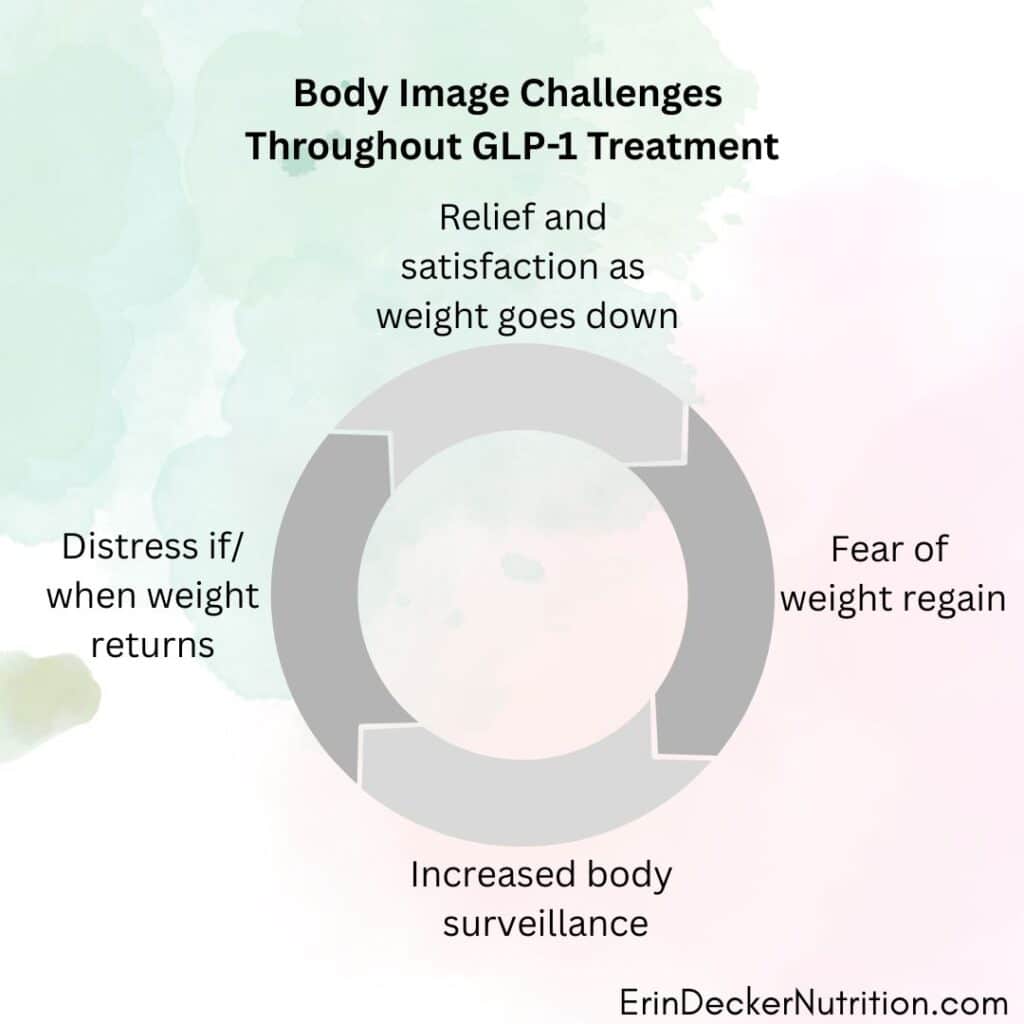
As you can imagine, improved body satisfaction is fleeting. And for some who don’t respond to these medications (17% are reported to be “non-responders”), it can lead to further questioning i.e. “what am I doing wrong? What’s wrong with me?”
FYI – if this is you, there’s nothing wrong with you, and you’re not alone!
On the other hand, positive body image may develop through body functionality.
This wasn’t studied directly, but the authors suggest that GLP-1s may improve energy levels, physical comfort, mobility, and ability to participate in meaningful activities. For many of my clients in larger bodies, this is a big driving factor in their decision to try a GLP-1. There’s no shame if this is a factor for you. It is valid and makes a lot of sense to me, granted I do not have lived experience in a larger body myself.
The decision to start a GLP-1 has always been a heavy one to make. I have talked through the decision with several clients as they processed many of these points. There is this building pressure for bodies to look a certain way, and on top of that we have the medicalization of being in a larger body and the moral implications if you are not pursuing health. For instance, you are not a good person if you are unhealthy, you are a drain on the healthcare system, and others even more stigmatizing. There is no shame in wanting to escape these thoughts.
And on the other hand, taking a GLP-1 is not “the easy way out”. This decision comes with risks, and a further complicated relationship with one’s body is one not listed on the package insert.